
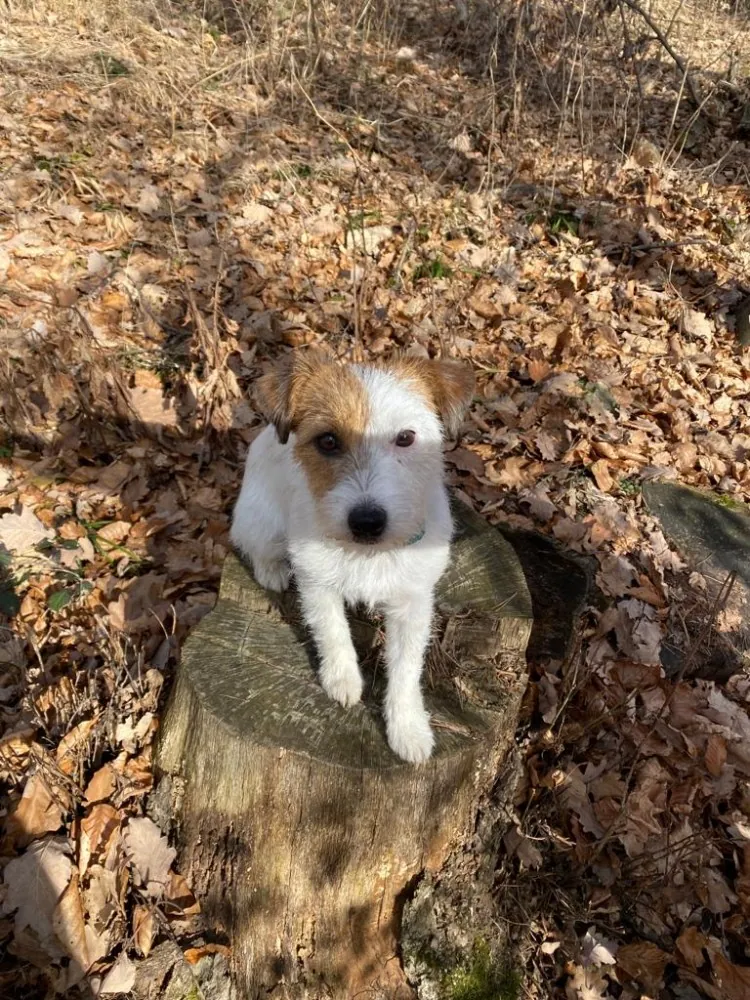
"Dogs welcome." These two words appear on a surprising number of hotel websites. If you've ever travelled with a dog, you know they mean almost nothing. They don't say whether your dog can join you in the restaurant. They don't say whether it can go into the lake. They don't say whether you have to get in the car for the first walk. They only say: your dog will be tolerated.
This is exactly where the disappointment begins for many dog owners. You book a place that calls itself dog-friendly and realise on the first evening that "dog-friendly" for this hotel means: in the room yes, otherwise no. The dog stays alone while you eat. At the pool or the sun-lounger area it isn't wanted. And the nearest forest where it can run free is ten minutes away by car.
This article is meant to help you spot that before booking - not on site. There are four questions which, answered honestly, quickly show where you stand. They work for every hotel, not just ours.
The three levels of "dog-friendly"
It helps to distinguish between three levels. They sound similar but are very different in practice.
Tolerated. The dog may come, usually for a surcharge, and otherwise stays in the background. In the room yes, in the public areas no. This is the most common level, and it's perfectly fine - as long as you know that's what you've booked.
Allowed. The dog may come into more areas, such as the terrace or certain spots. There are rules, but there's leeway. Noticeably more pleasant.
Welcome. The dog belongs. It can come into the restaurant, it has access to the water, and the staff are pleased when it arrives instead of raising an eyebrow. This level is rare, and it often can't be read off a website at first glance. Hence the four tests.
What most hotels really mean by "dogs welcome"
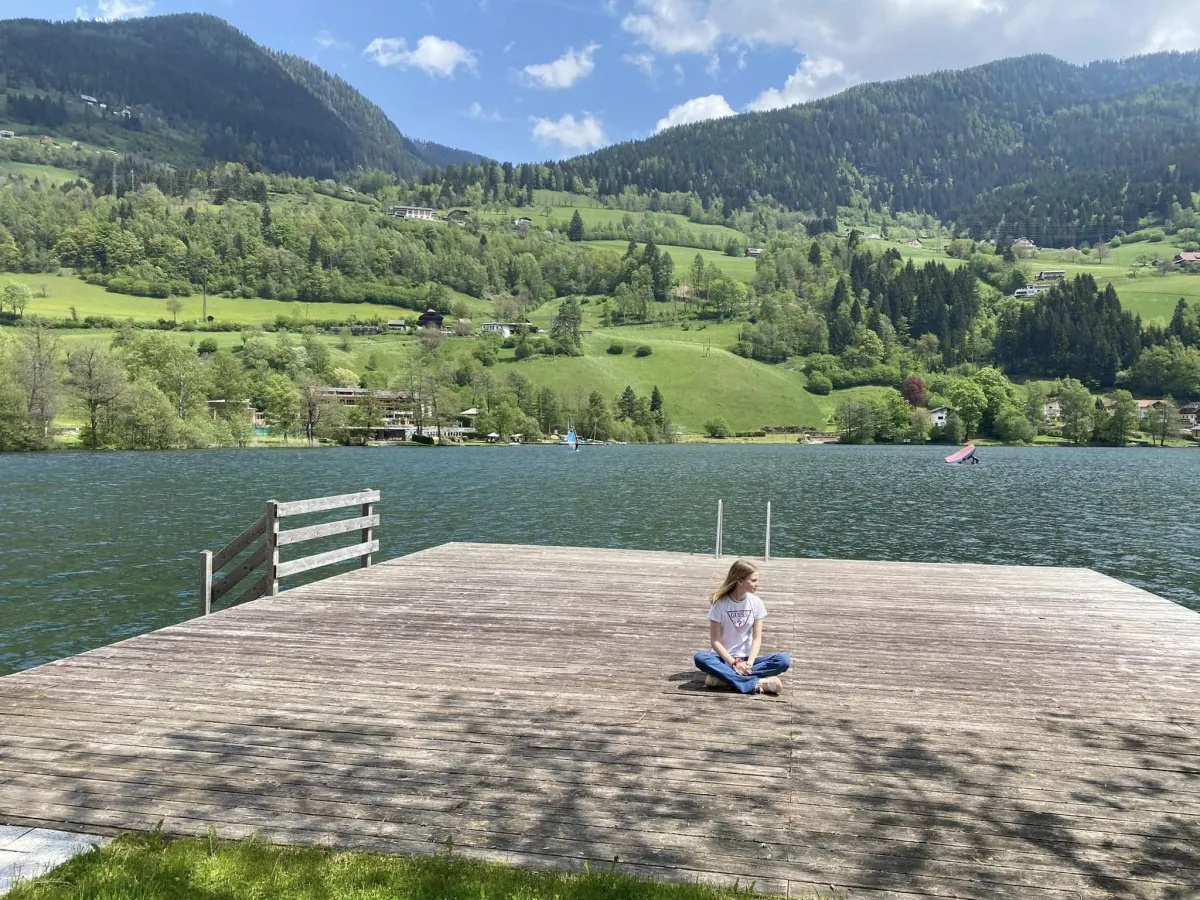
Before we get to the tests, an honest observation: the bigger a hotel, the more likely "dog-friendly" appears on its website and the less there is behind it. That's not ill will. In a large hotel with a buffet restaurant, several hundred guests and a spa area, a dog at the table is organisationally difficult. So it stays outside.
The result: in practice, "dogs welcome" often means "dogs allowed in the room, surcharge per night, on a lead everywhere, not in the dining area, not in the spa". That's legitimate. It's just something different from what the phrase promises. Anyone travelling with a dog should therefore look not at the label but at four concrete points.
Test 1: Is the dog allowed in the restaurant?
This is the most important and at the same time the most honest test. If your dog is allowed to lie next to you at dinner, that says more about a hotel than any feel-good phrasing. Because it means the hotel has set up its operation so that a dog in the room is normal - and that the other guests expect it.
Ask specifically: is the dog allowed in the dining area, inside as well as on the terrace? Is there a place for it there, a blanket, a water bowl? Or is the answer: "we're happy to serve in your room"? The answer separates the tolerated hotels from the welcome hotels pretty reliably.
In smaller, independently run houses with their own kitchen this is far more often possible than in big buffet operations. Where the cooking is à la carte and the host is in the room in person, a quietly resting dog isn't a problem but part of the evening.
Test 2: Is there private lake access where the dog can swim?
Many hotels advertise a "lakeside location". That doesn't mean your dog can go into the water. At many bathing spots and lidos, dogs aren't allowed in the water, especially in high season. Anyone who then wants to swim with their dog often has to look for a separate dog bathing spot, which is usually some way off.
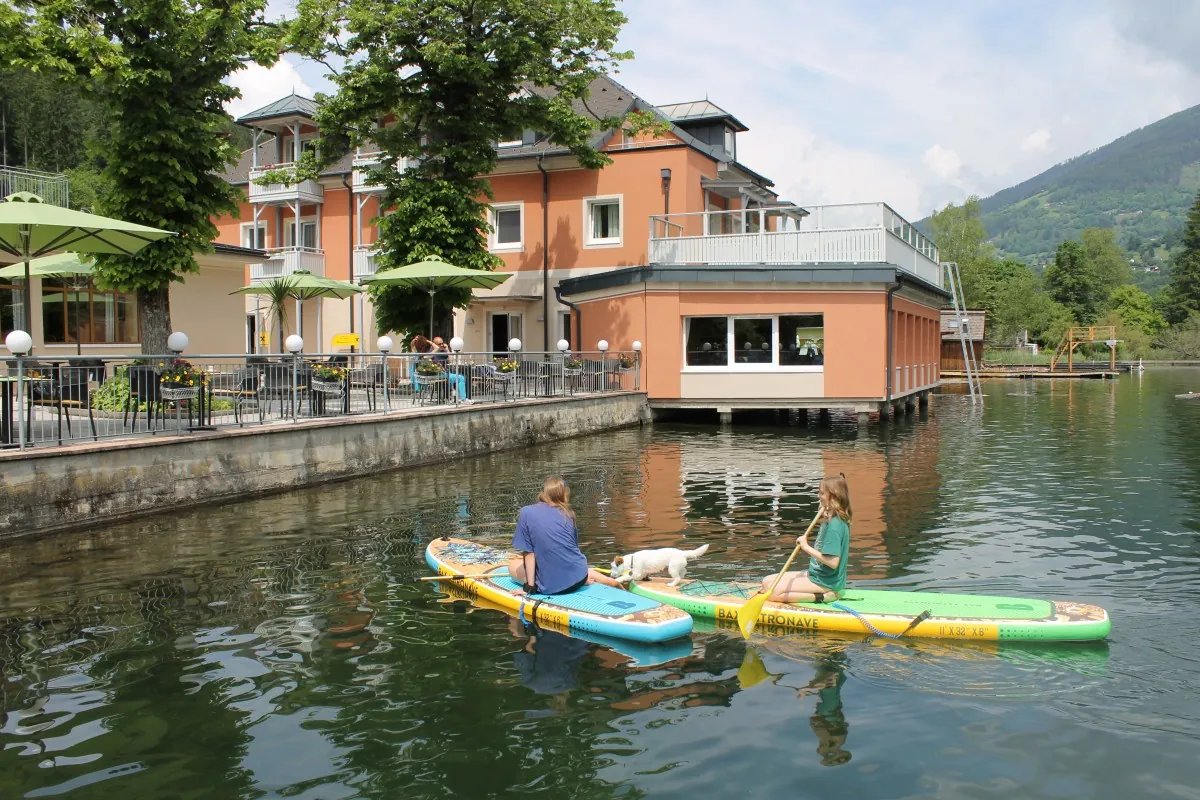
So ask: does the hotel have its own access to the lake? And is the dog allowed into the water there? Direct, private lake access where the dog can swim too makes a real difference - especially on a lake with good water quality, as is the case at Lake Brennsee, whose water is of drinking-water quality.
The practical effect is big: you walk from the house to the water, the dog swims a round, you dry it off, done. No driving, no searching for the one permitted spot.
Test 3: Do walks start at the front door, or do you have to get in the car?
Everyday life with a dog on holiday doesn't consist of big excursions but of many small rounds. In the morning before breakfast, at midday, in the evening before bed. If you first have to drive ten minutes for each of these rounds, the recovery value quickly evaporates.
So the question is: do walking and hiking paths begin right at the house, or does the hotel sit on a through road from which you first have to get somewhere? In a region like the Gegendtal around Feld am See, with paths by the lake and in the Nock Mountains, a lot can be reached on foot from the front door. That sounds like a small thing, but it decides whether a holiday with a dog is relaxed or constantly needs organising.
Test 4: How big is the hotel - and what does that mean for a sensitive dog?
Hotel size is rarely connected with the dog, yet a lot depends on it. A big hotel means lots of people, long corridors, lots of activity, often a lift the dog has to go through. For a confident dog, no problem. For an unsure, older or easily irritated dog, it can be constant stress.
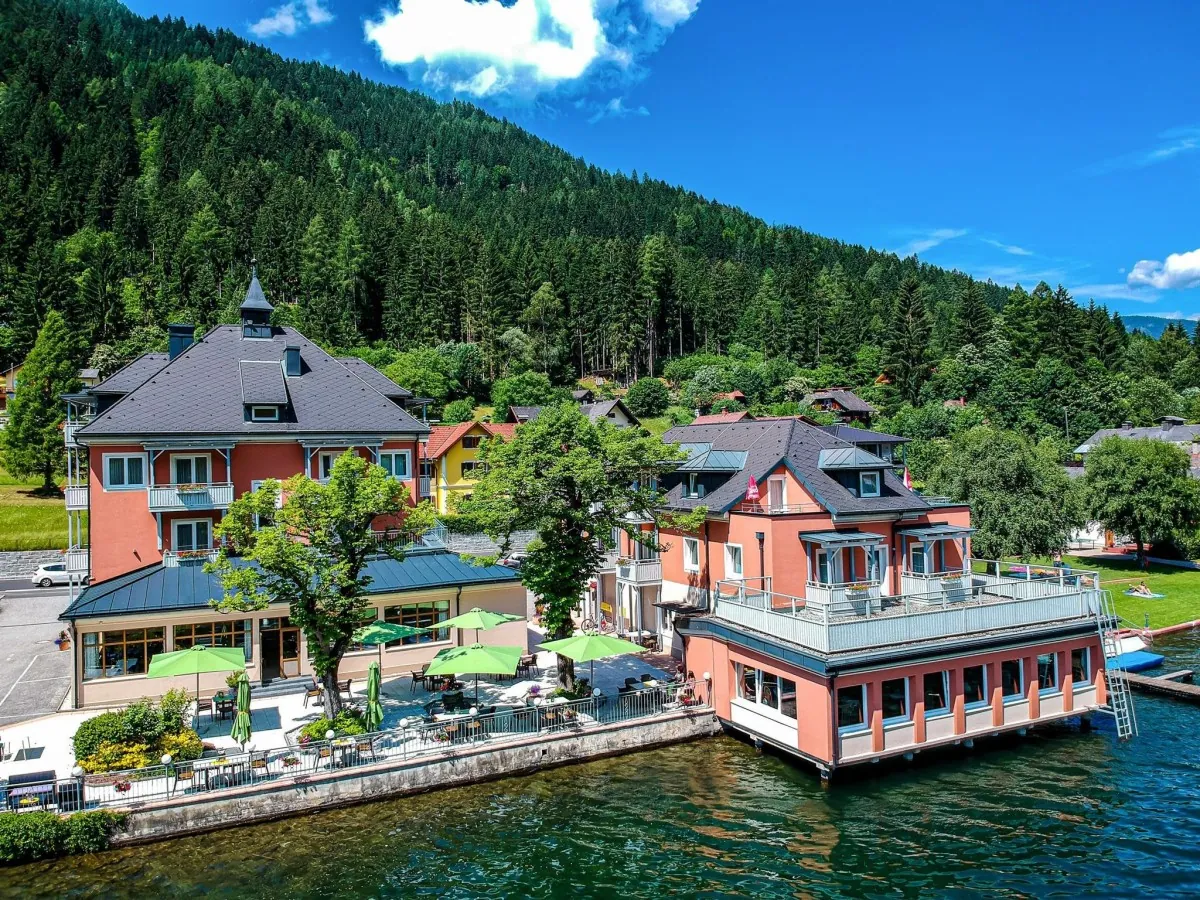
A small house - say in the region of a good two dozen rooms - is manageable. Fewer unfamiliar dogs, less bustle, quieter evenings. That isn't the deciding factor for everyone, but if your dog is more the sensitive type, you should include it in the calculation. Adults-only houses often have an additional advantage here, because the noise level is simply lower.
Which questions you should ask before booking
If you combine the four tests, you get a short list you can put to any hotel by email or phone before you book:
- Is my dog allowed in the dining area - inside and on the terrace?
- Is there private lake access where my dog can swim?
- Do walks start right at the house, or do I need the car for that?
- How many rooms does the hotel have, and how quiet is it?
- Which rules apply to dogs, and what does it cost?
Pay less attention to the adjectives in the answer and more to how specific it is. A hotel that's really geared to dogs answers these questions quickly and without evasion. Where it gets vague, it's worth asking again - or choosing another hotel.
And one more honest word: even a truly dog-friendly hotel has its limits. In great heat, the lake isn't the solution for every dog, and not every house rule suits every animal. A hotel that tells you these limits openly instead of promising everything is usually the more honest one. We've written a separate article on this in which we name when a holiday with a dog at our place is not a good idea.
How we handle it here
So that this article doesn't remain pure theory, the short comparison: at the Strandhotel Burgstaller, the dog is allowed in the restaurant and on the lakeside terrace, there is direct access to Lake Brennsee where it can swim, walks begin at the house, and with around two dozen rooms and an adults-only atmosphere it's quiet enough even for sensitive dogs.
You'll find more on walks, swimming spots, conditions and the region on our overview page Holidays with your dog on Lake Brennsee. If you'd like to know whether your preferred dates are free, the best thing is to check availability directly - or drop us a quick line about which dog you're coming with. We'll tell you honestly whether it's a good fit.